
Taguella: Experience the Authentic Taste of Sahara Bread
Introduction: A Taste of Nomadic Heritage
Imagine standing in the heart of the Sahara Desert, the air thick with the coolness of the evening breeze, as the sky above you transforms into a canvas of stars. You’re surrounded by the whispering sands, which have been a witness to centuries of nomadic life. In the midst of this vast, unforgiving landscape, there’s one thing that has nourished and sustained generations: Taguella. This isn’t just bread; it’s a living piece of Tuareg culture, a testament to the resilience, ingenuity, and tradition of desert-dwelling peoples.
What is Taguella? A Traditional Saharan Delight
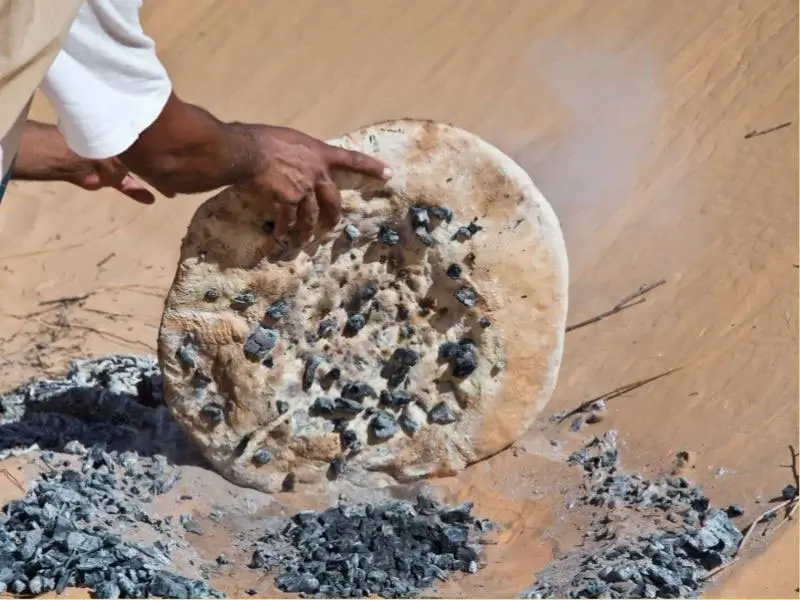
Taguella is a traditional, sand-baked bread from the Sahara Desert, particularly associated with the Tuareg people. At first glance, it resembles a round, flat pancake, but the rich, smoky flavor is what sets it apart. The bread has no yeast, no leavening agents—just simple ingredients: wheat flour, water, and salt. Yet, it’s this simplicity, combined with an ancient and unique method of baking, that gives Taguella its rich cultural significance. It’s not just food; it’s a story of survival, community, and adaptation to one of the most challenging environments on Earth.
The Origins of Taguella: A Berber Culinary Tradition
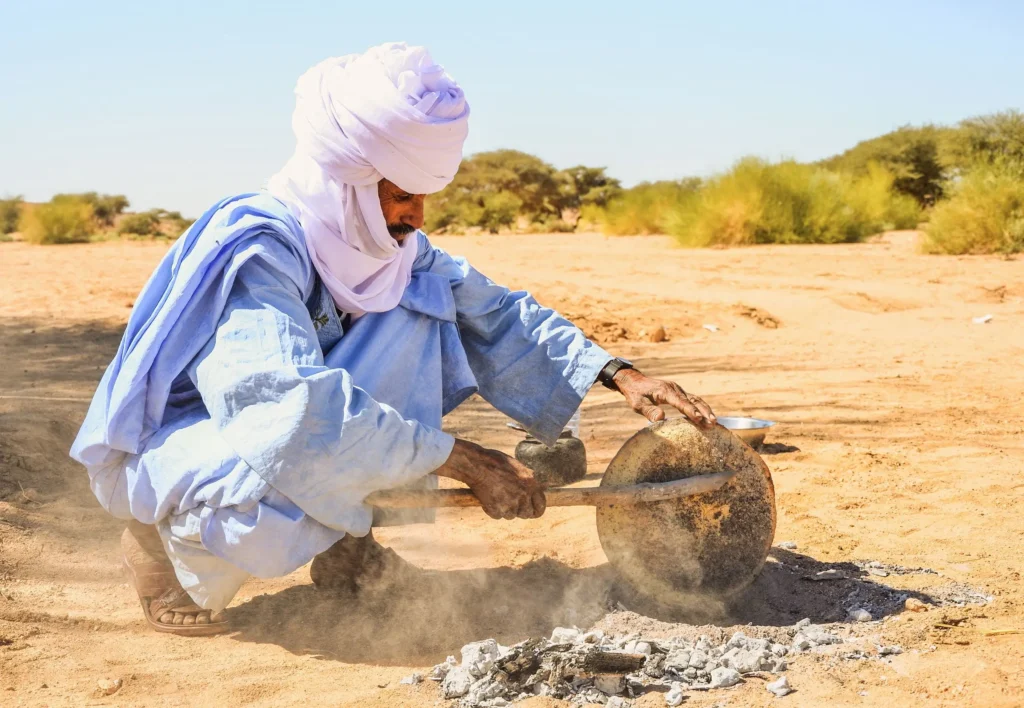
The Tuareg people, often referred to as the “Blue People” due to the indigo-dyed garments they wear, are a Berber ethnic group native to the Sahara. Their nomadic lifestyle in the harsh desert climate has shaped many of their practices, and Taguella is an essential part of their culinary heritage. This bread has sustained the Tuareg for centuries, evolving as a food that is both practical and symbolic.
In the Sahara, resources are scarce, and conventional cooking methods are impractical. However, the Tuareg people discovered a clever way to utilize the desert’s natural resources: they bake their bread in the hot sands, allowing the environment to do the work. Taguella isn’t just a meal; it’s a direct connection to the land and its people.
How is Taguella Made? A Step-by-Step Guide
Ingredients: Simple Yet Essential
The beauty of Taguella lies in its simplicity. The key ingredients are:
- Wheat flour: The foundation of the bread, offering structure and a subtle, nutty flavor.
- Salt: To enhance the taste.
- Water: Used to bind the ingredients together into a smooth, pliable dough.
These three humble components combine to create a versatile and flavorful bread, perfect for the nomadic lifestyle.
The Unique Sand-Baking Method
What makes Taguella truly unique is its unconventional baking method. The process of baking in the Sahara’s scorching sands sounds unusual, but it is a time-tested method that has been passed down through generations. Here’s how it’s done:
- Prepare the Dough: Mix the wheat flour, salt, and water until a smooth, elastic dough is formed. Knead it with care; the act of kneading is almost a ritual in itself.
- Let It Rest: Once kneaded, the dough is left to rest under the desert sun, allowing it to rise slightly and soak in the essence of the desert air.
- Build the Fire: Dry shrubs and twigs are gathered and set on fire. After the flames subside, a bed of hot embers remains—this is what will cook the bread.
- Bury the Dough: The dough is flattened into a disc and placed in a shallow hole dug in the hot sand. It’s then covered with sand and embers, creating an oven-like effect.
- Bake: After about 25 minutes, the bread is carefully unearthed. What emerges is a golden-brown loaf with a smoky, earthy aroma, unlike any other bread baked in a traditional oven.
How Tuareg Nomads Perfect the Art of Baking in the Desert

For the Tuareg, baking Taguella is more than just a cooking technique. It’s an art form that requires precision and patience. Over the centuries, they’ve honed their skills, learning how to judge the perfect temperature of the sand, how to knead the dough just right, and how long to bake it for that ideal combination of crispness and softness. This technique isn’t just about survival; it’s a deep connection to the land and the traditions of their ancestors.
Why Taguella is More Than Just Bread
Cultural Significance Among the Tuareg People
In Tuareg culture, food is about more than just sustenance. Sharing a meal, especially Taguella, is a symbol of unity and hospitality. The bread is often broken into pieces and shared among friends and family, reinforcing the bond between them. It’s not just the act of eating but the communal experience of preparation, storytelling, and music that makes it so special.
The Role of Taguella in Desert Survival
Beyond its cultural value, Taguella is also an essential part of desert survival. Its dense texture and high carbohydrate content provide lasting energy for the Tuareg, who travel long distances across the vast desert. The bread is easy to transport, does not spoil quickly, and can be paired with a variety of sauces or dips, making it an ideal food for nomadic life.
Taguella vs. Other Traditional Breads
How It Compares to Middle Eastern and African Flatbreads
At first glance, Taguella might resemble other flatbreads, such as Middle Eastern pita or East African injera. However, while these breads are baked in ovens or on griddles, Taguella’s unique sand-baking method gives it a distinctly smoky flavor and a firmer, chewier texture.
Why Sand-Baking Makes It Unique
The sand-baking method isn’t just a makeshift solution—it’s a deliberate and effective cooking technique. The direct contact with hot sand and embers creates a crust that is both crisp and slightly charred, while the inside remains soft and tender. The subtle smokiness from the sand infuses the bread, creating a flavor that connects each bite to the Sahara itself.
The Best Way to Enjoy Taguella
Pairing It with Traditional Sauces and Beverages
Taguella is often served with a variety of traditional sauces, such as rich tomato-based sauces or peanut sauces. The bread is torn into pieces and dipped into the sauce, absorbing the flavors while maintaining its firm texture. One of the most popular accompaniments is Ezzit, a creamy sauce made from crushed peanuts and spices that balances the bread’s heartiness with a smooth, nutty richness.
No Taguella experience is complete without a glass of Tuareg tea. This strong, sweet tea is brewed with meticulous care, and the ceremony of preparing and serving the tea is an important social ritual that reflects the values of patience and hospitality within Tuareg culture.
A Special Experience at Aladdin Desert Camp
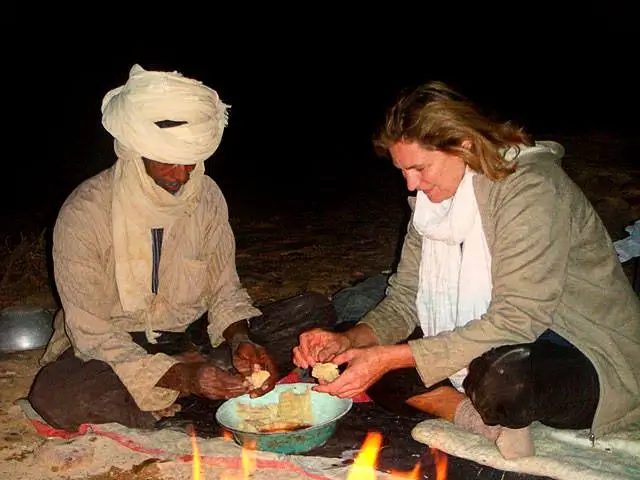
For those looking to experience the making and enjoyment of Taguella firsthand, the Aladdin Desert Camp offers an authentic experience. Located in the heart of the Sahara, the camp allows guests to witness the traditional process of Taguella preparation, from kneading the dough to the sand-baking ritual. As the bread is baked, you can sit by a campfire under the stars, enjoying the rich flavors and learning about Tuareg history and culture.
Where to Try Authentic Taguella?
Discovering Traditional Cuisine in the Sahara
The Sahara is not only a breathtaking landscape but also a destination for culinary discovery. Many desert tours and local camps offer traditional meals, and Taguella is often at the heart of these feasts. By engaging with local Tuareg communities, travelers can gain a deep appreciation for this ancient culinary tradition.
Visiting the Aladdin Desert Camp for an Authentic Experience
The Aladdin Desert Camp is an excellent place to experience the authentic making and enjoyment of Taguella. Guests can join in the entire process, from kneading the dough to enjoying the freshly baked bread under the stars. This immersive experience offers a profound connection to the culture and skills of the Tuareg people.
FAQs About Taguella
What does Taguella taste like?
Taguella has a unique flavor—slightly smoky from the sand-baking process, with a dense, chewy interior and a firm crust. The bread’s simple, earthy taste pairs beautifully with a variety of sauces, making it a versatile dish.
Is it safe to eat bread cooked in sand?
Yes, absolutely! The Tuareg have been perfecting this method for centuries. The high temperatures of the sand effectively bake the bread, and it’s a safe and traditional cooking method.
How long does it take to make Taguella?
The entire process, from kneading the dough to baking it in the sand, takes about 1 to 1.5 hours, depending on the heat of the embers.
Where can I try authentic Taguella?
You can experience authentic Taguella in the Sahara, especially at desert camps like Aladdin Desert Camp, where the bread is made using traditional methods and enjoyed with the Tuareg people.
Conclusion: The Taste of Tradition in Every Bite
Taguella isn’t just bread; it’s a rich part of Tuareg culture, a symbol of survival, community, and ingenuity in the Sahara Desert. Every bite connects you not only to the bread itself but to the timeless traditions of a people who have lived in harmony with the desert for centuries. Whether you’re lucky enough to experience it in the desert or try your hand at making it yourself, Taguella is more than just food—it’s a journey through history, culture, and the heart of the Sahara.
